The best heavy duty truck diagnostic tool in 2026 is not the one with the longest feature list. It is the one that helps you answer three questions quickly: 1. What is wrong? 2. Can I keep moving safely? 3. What should I check next? For owner operators, fleets, and repair shops, that means looking beyond basic code reading. A good heavy duty truck diagnostic tool should support the truck protocols and systems you work on, read active and inactive fault codes, show live data, support key…
Best Heavy-Duty Truck Diagnostic Tool in 2026: What to Look For

The best heavy-duty truck diagnostic tool in 2026 is not the one with the longest feature list. It is the one that helps you answer three questions quickly:
- What is wrong?
- Can I keep moving safely?
- What should I check next?
For owner-operators, fleets, and repair shops, that means looking beyond basic code reading.
Why Heavy-Duty Diagnostics Are Different From Car OBD
Passenger car scanners are built around light-duty OBD-II. Heavy-duty trucks often rely on protocols and data networks such as J1939, J1708, and manufacturer-specific diagnostic layers.
That difference matters because a cheap scanner may show a generic code but miss the live data and context needed to make a good decision.
The 2026 Buyer Checklist
| Feature | Why It Matters |
|---|---|
| Heavy-duty protocol support | J1939/J1708 coverage is essential for many commercial trucks |
| Active and inactive fault codes | Inactive codes often explain recurring problems |
| Live data | Helps confirm sensor behavior and root cause |
| Aftertreatment data | DPF, DEF, SCR, NOx, and temperature data are central to modern diesel diagnosis |
| Supported commands | Workflows like DPF regen depend on vehicle compatibility |
| Clear app workflow | The tool should be usable in the cab or shop |
| Software updates | Coverage and workflows change over time |
| Support and documentation | Diagnostics are only useful if users know what to do next |
What Owner-Operators Should Prioritize
Owner-operators usually need speed and clarity.
Look for:
- Fault code reading
- Plain-language code information
- Live data for DPF, DEF, SCR, NOx, battery, boost, and temperatures
- Supported DPF regen workflows
- Easy app download and setup
- Device renewal and support access
The tool should help you decide whether you can keep driving, need a regen, need a shop, or need more diagnosis.
What Repair Shops Should Prioritize
Repair shops need repeatable diagnostic workflow.
Look for:
- Multi-system code reading
- Live data graphing or clear data lists
- Active and inactive code history
- Aftertreatment service data
- Sensor correlation
- Compatibility across the trucks you actually service
- Reliable support and updates
What Fleets Should Prioritize
Fleets should focus on uptime and consistency.
Look for:
- Tools that drivers or technicians can use consistently
- Fast triage for derate, DPF, DEF, and NOx problems
- Device management and renewal workflows
- Download and update clarity
- Support resources that reduce repeated calls
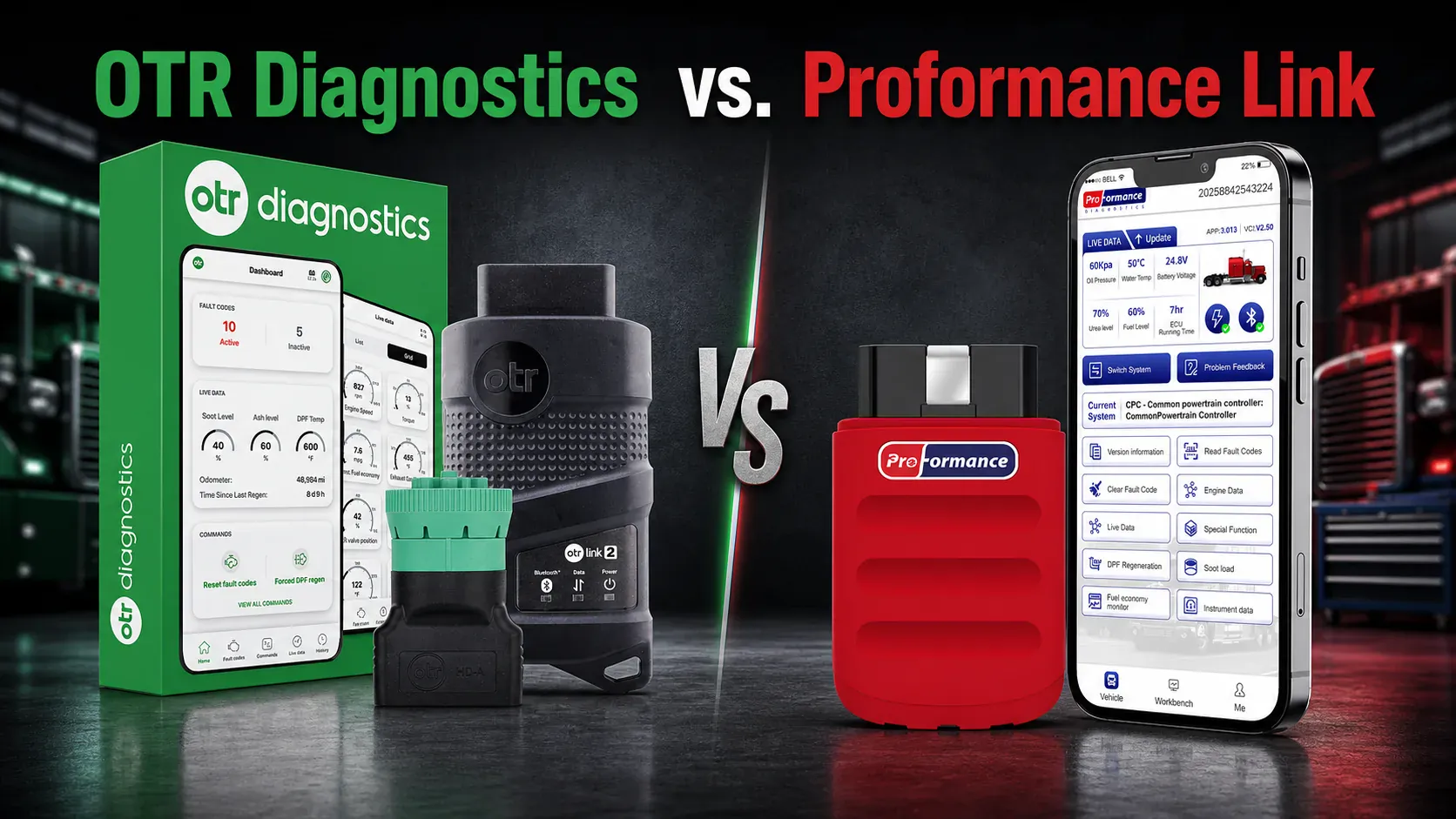
ProformanceLink vs Generic OBD Scanner
| Question | Generic OBD Scanner | ProformanceLink Workflow |
|---|---|---|
| Basic code reading | Often yes | Yes, for supported vehicles |
| Heavy-duty protocol focus | Varies | Built around supported commercial vehicle workflows |
| Live data | Often limited | Central to the workflow |
| DPF/aftertreatment context | Often limited | Designed around diesel diagnostic needs |
| App-based workflow | Varies | Phone-based user experience |
| Support resources | Varies | Official Proformance support and downloads |
Questions to Ask Before You Buy
1. What trucks do I need to support?
Do not buy based on a generic claim. Check make, model, engine, model year, connector, and diagnostic protocol.
Start with the official compatibility resources:
2. Do I need live data or just codes?
If you only need to clear basic codes, a simple scanner may be enough. If you need to diagnose DPF, DEF, NOx, boost, EGR, battery voltage, or derate causes, live data matters.
3. Do I need service commands?
Commands such as DPF regeneration depend on the vehicle and the tool. Confirm support before buying.
4. Who will use the tool?
The best choice for a trained shop technician may not be the best choice for a driver on the road. Usability matters.
FAQ
What is the best diagnostic tool for heavy-duty trucks?
The best tool depends on the trucks, engines, protocols, and workflows you need. Look for heavy-duty protocol support, live data, fault codes, aftertreatment data, supported commands, compatibility resources, and ongoing updates.
Is a heavy-duty scanner different from a car OBD scanner?
Yes. Heavy-duty trucks often use J1939, J1708, and manufacturer-specific data. A light-duty OBD scanner may read limited information but miss the data needed for truck diagnostics.
Do I need live data?
If you diagnose DPF, DEF, SCR, NOx, boost, EGR, derate, or sensor problems, live data is essential. Codes tell you what complained. Live data helps explain why.
Can one tool support every truck?
No tool should be assumed to support every truck, engine, year, command, or calibration. Always verify compatibility before buying.