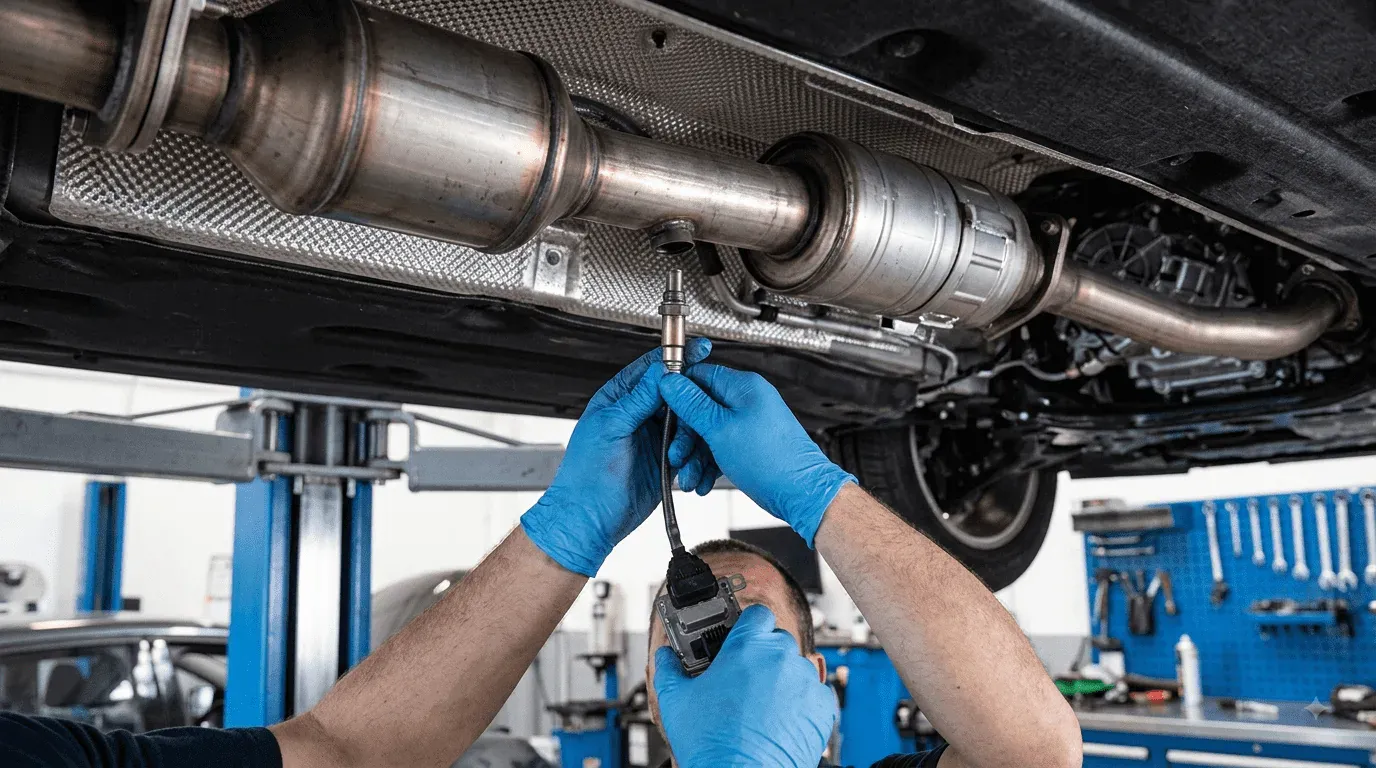
Modern diesel engines rely on advanced aftertreatment systems to meet strict 2025 EPA emission standards while maintaining peak performance and fuel efficiency. Understanding each component helps you diagnose problems faster, prevent costly downtime, and extend engine lifespan. The EPA has introduced new regulations requiring: Enhanced DEF system monitoring Improved thermal management for cold starts Advanced fault prediction to minimize vehicle derates Remote diagnostics and over the air updat…
2025 Diesel Aftertreatment System Guide: 9 Critical Components Every Owner-Operator Should Know


Modern diesel engines rely on advanced aftertreatment systems to meet strict 2025 EPA emission standards while maintaining peak performance and fuel efficiency.
Understanding each component helps you diagnose problems faster, prevent costly downtime, and extend engine lifespan.
Why This Matters in 2025
The EPA has introduced new regulations requiring:
- Enhanced DEF system monitoring
- Improved thermal management for cold starts
- Advanced fault prediction to minimize vehicle derates
- Remote diagnostics and over-the-air updates
Staying informed keeps your fleet compliant and operational.
1. Diesel Oxidation Catalyst (DOC)
The Diesel Oxidation Catalyst (DOC) is the first component in the aftertreatment system, located directly after the turbocharger.
Function: Converts carbon monoxide (CO) and unburned hydrocarbons (HC) into carbon dioxide (CO₂) and water (H₂O).
Key Specifications
Why It Matters
- The DOC must reach 250°F–750°F to initiate regeneration
- Insufficient heat prevents proper soot burnoff, affecting downstream components
2025 Update
Many systems now include electrically assisted heating or advanced thermal management to reach regeneration temperatures faster during cold starts.
Technical Reference
Cummins 2025 EPA-compliant aftertreatment system release documentation confirms these improvements.
2. Diesel Particulate Filter (DPF)
The DPF captures soot and particulate matter from exhaust gases and converts them to ash during regeneration.
Key Points
- Works with the 7th injector (hydrocarbon doser) to generate heat
- Regeneration temperatures reach up to 1100°F
- If soot fails to burn off, inspect both the DOC and 7th injector
2025 Improvement
New-generation DPFs feature:
- ✅ Enhanced coatings for better soot capture
- ✅ Smarter soot load monitoring
- ✅ Faster, more efficient regen cycles
3. Selective Catalytic Reduction (SCR)
How does the SCR system convert harmful NOx into harmless gases?
The Selective Catalytic Reduction (SCR) system reduces nitrogen oxide (NOx) emissions by injecting Diesel Exhaust Fluid (DEF) into the exhaust stream.
Process: Converts NOx into nitrogen (N₂) and water vapor (H₂O).
Watch For
- Poor DEF quality can cause crystallization and blockages
- The SCR operates best between 400°F–850°F
2025 Critical Updates
EPA 2025 Requirements
New Safety Features:
- Software safeguards now prevent sudden derates caused by DEF-related issues
- EPA27 (future) systems will prevent complete vehicle shutdowns due to low DEF or SCR malfunctions
- Real-time DEF quality monitoring is now standard
Sources: EPA 2025 DEF System Update Guidance, DieselNet Report
4. DEF Dosing Unit
The DEF dosing unit controls the precise amount of DEF injected into the exhaust. Proper operation ensures accurate NOx reduction.
Maintenance Schedule
2025 Update
Modern dosing units feature:
- Improved pressure regulation
- Real-time diagnostics
- More accurate dosing algorithms
- Faster troubleshooting capabilities
5. NOx Sensors
The truck's aftertreatment system includes two NOx sensors—one upstream and one downstream of the SCR catalyst—to measure NOx levels and provide data to the Engine Control Module (ECM).
Best Practices
Pro Tips
Sensor Maintenance:
- Always replace both sensors together to avoid mismatched readings
- Use OEM sensors for best accuracy and reliability
- Calibrate sensors after replacement
- Monitor sensor data regularly for early fault detection
2025 Improvement
Sensors now offer:
- ✅ Higher precision measurements
- ✅ Faster response times
- ✅ Enhanced contamination resistance
- ✅ Self-diagnostic capabilities
6. Temperature Sensors
Temperature sensors are strategically placed at three critical points:
- DOC Inlet — Monitors incoming exhaust temperature
- DOC/DPF Junction — Tracks regeneration efficiency
- Post-SCR — Verifies emission control effectiveness
Why They're Important
Primary Functions:
- Monitor exhaust temperatures to regulate regeneration
- Provide real-time data to the ECM
Failure Symptoms:
- Incomplete regenerations
- Incorrect DEF dosing
- False fault codes
- Excessive fuel consumption
2025 Trend
Advanced temperature management and self-calibrating sensors are now standard on most new systems, providing:
- More accurate readings
- Predictive maintenance alerts
- Adaptive thermal control
7. DPF Pressure Sensor
The DPF pressure sensor measures the pressure differential across the filter to detect soot buildup or restrictions.
Quick Fix Guide
Step-by-step repair process:
- ✅ Replace the faulty sensor using basic hand tools
- ✅ Clear fault codes from the ECM
- ✅ Perform a forced regeneration
- ✅ Verify proper pressure readings
2025 Enhancement
New sensors provide:
- Higher resolution readings
- Early-warning capability for soot buildup
- Integration with predictive maintenance systems
- More accurate filter condition monitoring
8. Engine Control Module (ECM)
The ECM is the brain of your truck's aftertreatment system.
Core Functions
Important Note
Professional Programming Required
If the ECM fails, it must be professionally programmed—avoid DIY replacements.
Incorrect programming can result in:
- System malfunctions
- Failed emissions tests
- Voided warranty coverage
- Safety hazards
2025 Update
ECMs now support:
- 🔧 Remote diagnostics
- 📡 Over-the-air (OTA) updates
- 🤖 Advanced fault prediction
- 📊 Real-time performance monitoring
- ⏱️ Minimized downtime through predictive alerts
9. Exhaust Gas Recirculation (EGR) Valve
The EGR valve recirculates a portion of exhaust gases back into the intake system, lowering combustion temperatures to reduce NOx emissions.
Potential Problems
A stuck-open EGR valve can cause:
- ❌ Overworked DEF system
- ❌ Increased soot buildup
- ❌ Vehicle derates
- ❌ Reduced fuel efficiency
- ❌ Premature DPF failure
Maintenance
Regular cleaning prevents unnecessary strain on the aftertreatment system and extends component lifespan.
2025 Advancement
EGR systems are now more closely integrated with SCR controls for:
- Improved emission efficiency
- Better fuel economy
- Reduced maintenance intervals
- Enhanced diagnostic capabilities
Stay Ahead of Aftertreatment Issues in 2025
Understanding these nine critical components enables you to:
✅ Diagnose issues faster
✅ Reduce repair costs
✅ Maximize uptime
✅ Meet EPA compliance standards
✅ Extend component lifespan
Act Immediately
If the vehicle enters derate mode or displays aftertreatment fault codes:
Immediate Actions:
- Pull over safely
- Retrieve fault codes using a diagnostic tool
- Check DEF levels and quality
- Verify regeneration status
- Contact a professional if issues persist
Ignoring warnings may result in:
- Expensive repairs
- Extended downtime
- Failed emissions testing
- Voided warranty coverage
Diagnostic Tools for 2025 Systems
Modern aftertreatment systems require advanced diagnostic capabilities:
Essential Features:
- Real-time data monitoring
- Fault code analysis
- Component-level diagnostics
- Remote troubleshooting support
- Predictive maintenance alerts
Professional Support Available
Get Expert Help
For advanced diagnostic tools and professional support, visit Proformanceusa — helping owner-operators and fleets maintain complete control of their truck's health.
We provide:
- OEM-quality diagnostic equipment
- Expert technical support
- Comprehensive training resources
- 24/7 troubleshooting assistance
Summary: 9 Components Checklist
Stay compliant, stay profitable, stay on the road. Master your aftertreatment system with expert guidance from Proformanceusa Diagnostics.