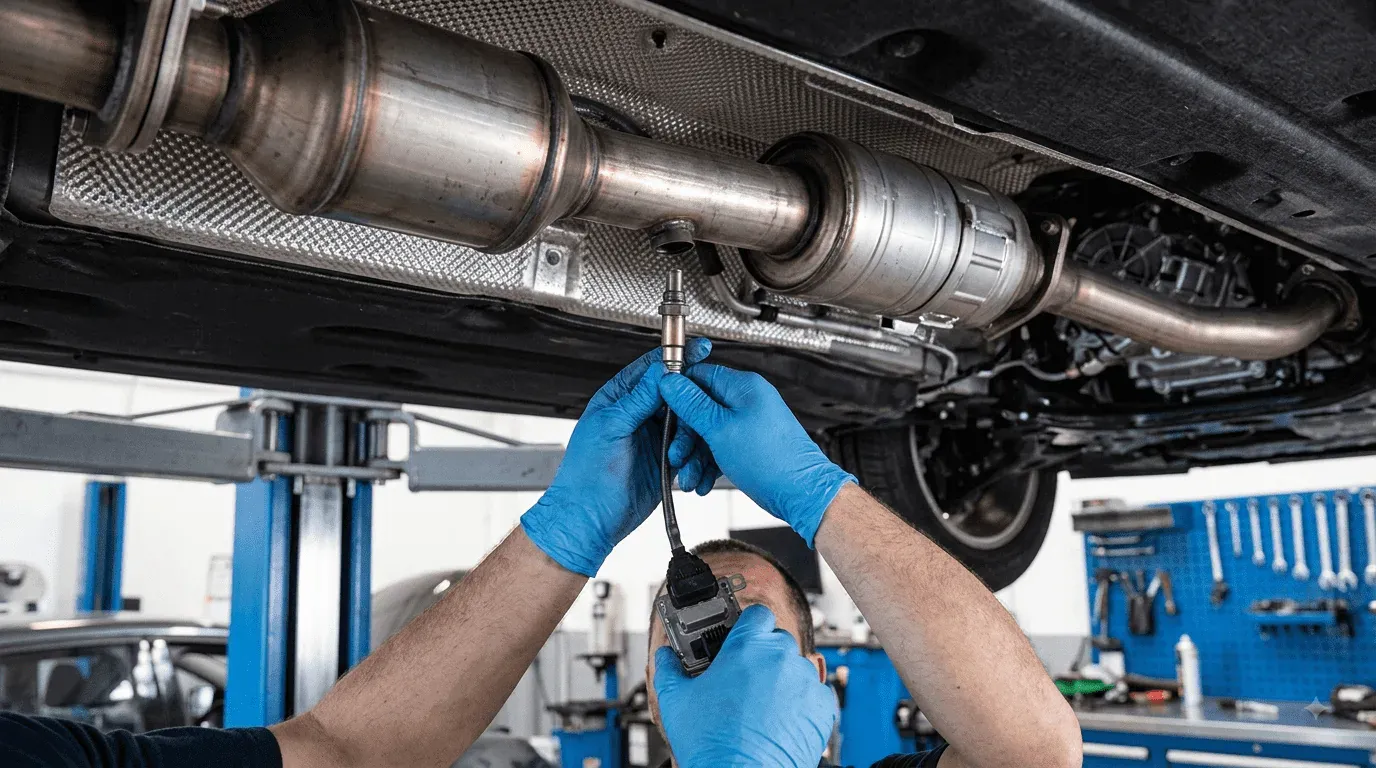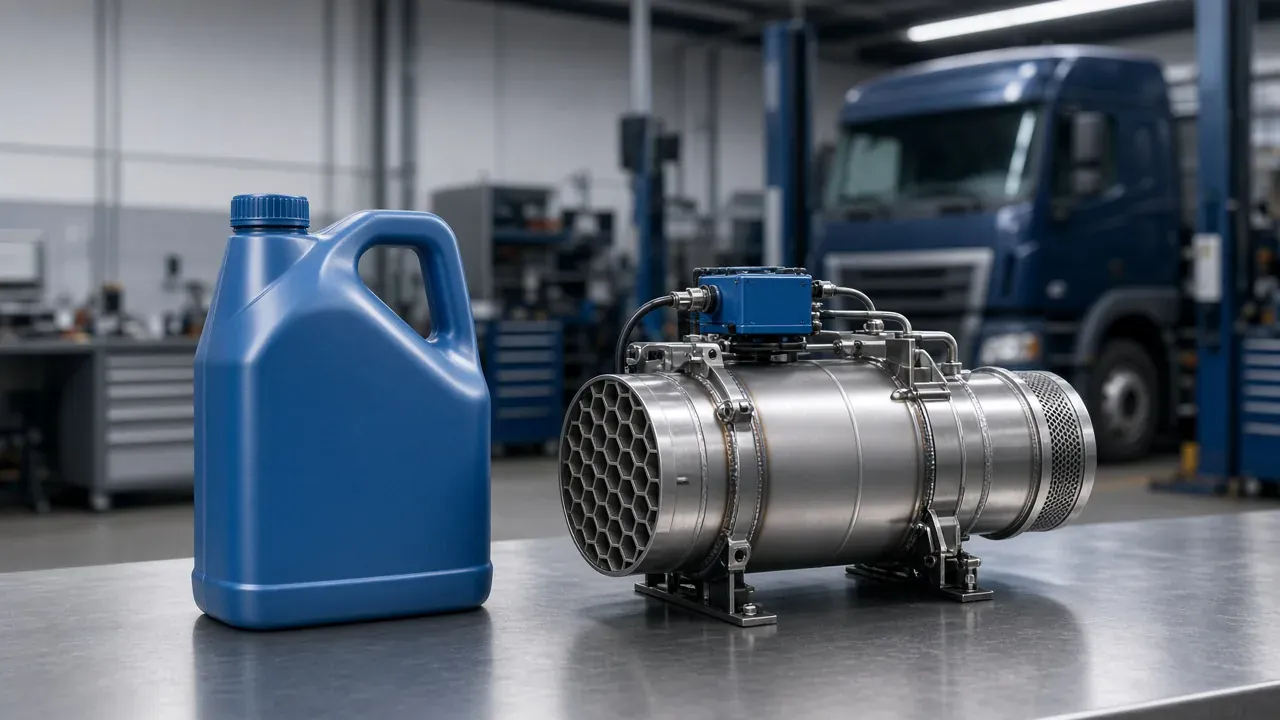
Common NOx Sensor Fault Codes Explained: Causes and Solutions NOx sensors are essential components of modern diesel truck emission systems. They monitor nitrogen oxide (NOx) levels in the exhaust system and provide critical data to the engine control module (ECM) for SCR system control. When a NOx sensor fails or provides inaccurate data, it can trigger fault codes, reduce engine performance, and cause emission system warnings. This guide explains the most common NOx sensor fault codes, their c…
Common NOx Sensor Fault Codes Explained: Causes and Solutions

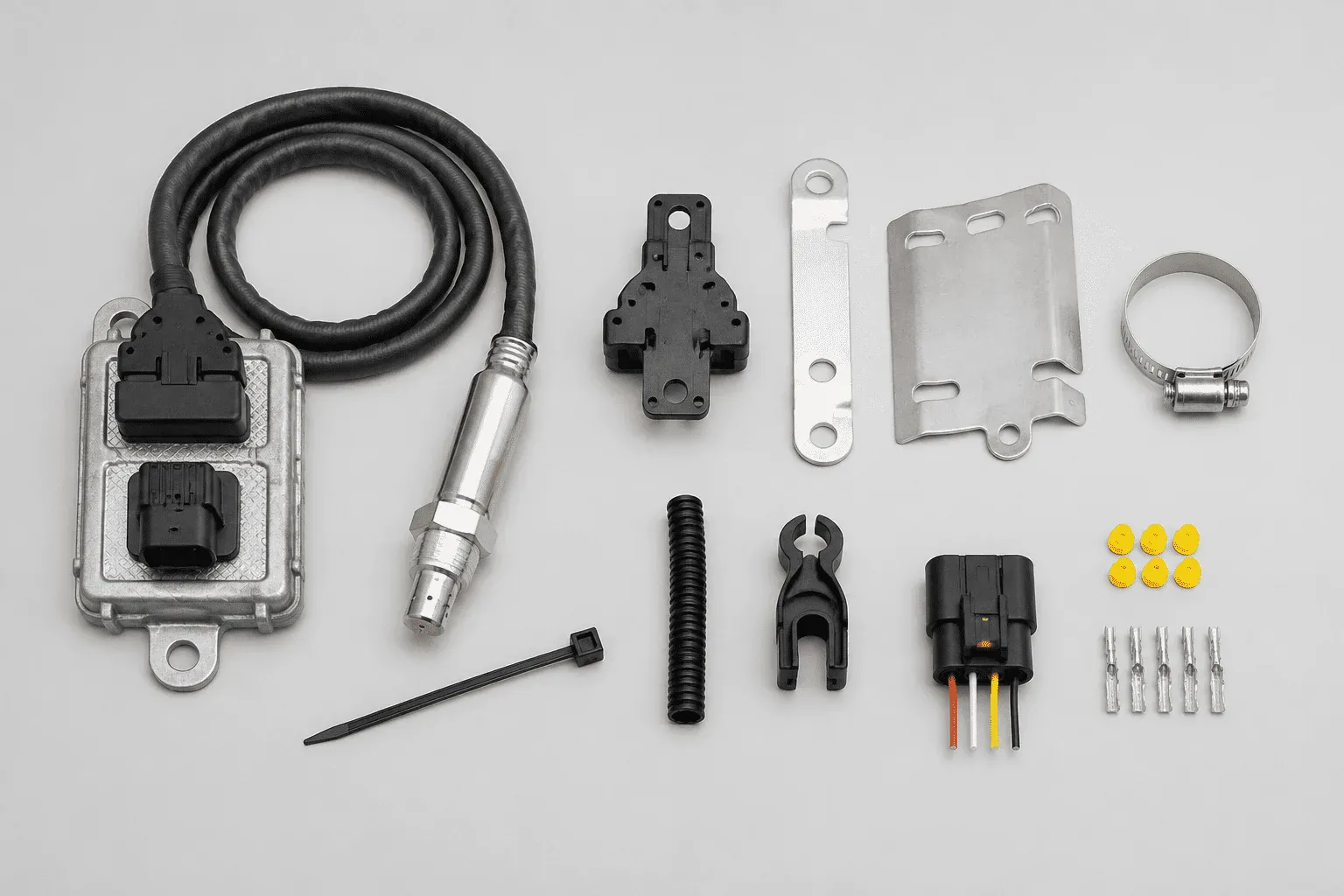
Common NOx Sensor Fault Codes Explained: Causes and Solutions
NOx sensors are essential components of modern diesel truck emission systems. They monitor nitrogen oxide (NOx) levels in the exhaust system and provide critical data to the engine control module (ECM) for SCR system control.
When a NOx sensor fails or provides inaccurate data, it can trigger fault codes, reduce engine performance, and cause emission system warnings.
This guide explains the most common NOx sensor fault codes, their causes, symptoms, and recommended diagnostic steps.
What Does a NOx Sensor Do?
A NOx sensor measures nitrogen oxide levels in diesel exhaust and communicates with the vehicle's ECM.
The ECM uses NOx sensor data to control:
- DEF (Diesel Exhaust Fluid) injection
- SCR catalyst efficiency
- Emission system performance
- Aftertreatment operation
Most heavy-duty diesel trucks use two NOx sensors:
- Upstream NOx Sensor — Installed before the SCR catalyst
- Downstream NOx Sensor — Installed after the SCR catalyst
The upstream sensor measures engine-out NOx levels, while the downstream sensor verifies SCR system efficiency.
Common NOx Sensor Fault Codes
SPN 3226 — NOx Sensor Data Invalid
Description
SPN 3226 indicates that the NOx sensor is reporting invalid or unreliable data to the ECM.
This is one of the most common NOx sensor-related faults on heavy-duty diesel trucks.
Common Causes
Possible causes include:
- Failed NOx sensor
- Damaged wiring harness
- Poor electrical connection
- Exhaust leaks
- Incorrect sensor calibration
- SCR system problems
Symptoms
Drivers may experience:
- Check engine light
- Emission warning messages
- Reduced engine power
- Increased DEF consumption
- Failed emissions testing
Diagnostic Steps
Technicians should:
- Check NOx sensor communication
- Inspect wiring and connectors
- Compare upstream and downstream NOx readings
- Verify exhaust system condition
- Test sensor operation
SPN 3216 — NOx Sensor Circuit Fault
Description
SPN 3216 indicates an electrical or communication problem with the NOx sensor circuit.
The ECM cannot properly receive or process sensor information.
Common Causes
- Damaged sensor harness
- Corroded connector pins
- Power supply issues
- Ground circuit failure
- Internal sensor module failure
Inspection Checklist
Check:
- Sensor connector condition
- Power and ground circuits
- CAN communication
- Sensor heater operation
- Harness damage near exhaust components
SPN 4094 — SCR System Efficiency Fault
Description
SPN 4094 indicates that the SCR aftertreatment system is not reducing NOx emissions as expected.
Although this fault is often related to NOx sensor readings, the sensor may not always be the actual problem.
Possible Causes
- Faulty NOx sensor
- Poor DEF quality
- DEF injector failure
- SCR catalyst damage
- Exhaust temperature issues
Important Diagnostic Tip
Do not replace a NOx sensor immediately after seeing SPN 4094.
Always verify:
- NOx sensor data
- DEF system operation
- SCR catalyst performance
P2201 — NOx Sensor Range/Performance
Description
P2201 means the NOx sensor signal is outside the expected operating range or performance specification.
Common Causes
- Aging NOx sensor
- Incorrect NOx readings
- Exhaust contamination
- Wiring problems
- Software calibration issues
Common Symptoms
- Check engine light
- SCR warning message
- Reduced power mode
- Emission system failure
P229F — NOx Sensor Performance
Description
P229F indicates that the ECM has detected abnormal NOx sensor performance.
The sensor response does not match expected operating conditions.
Possible Causes
- Defective NOx sensor
- Incorrect replacement sensor
- Communication errors
- SCR system problems
How to Diagnose NOx Sensor Faults Correctly
A NOx sensor fault code does not always mean the sensor itself has failed.
A proper diagnostic process should include:
1. Check Live NOx Data
Review:
- Upstream NOx values
- Downstream NOx values
- NO and NO₂ readings
- Sensor response time
2. Inspect the SCR System
Check:
- DEF injection system
- DEF quality
- Exhaust temperature sensors
- SCR catalyst efficiency
3. Test Electrical Communication
Verify:
- Sensor power supply
- Ground circuit
- CAN communication
- Heater operation
4. Confirm Sensor Compatibility
Before replacing a NOx sensor, verify:
- OEM part number
- Truck model
- Engine model
- Sensor location
Common Trucks Affected by NOx Sensor Problems
NOx sensor faults are commonly found on:
- Freightliner Cascadia
- Peterbilt 579
- Peterbilt 389
- Kenworth T680
- Volvo VNL
- International LT
- Mack Anthem
Common diesel engines include:
- Cummins X15
- Detroit DD13 / DD15
- PACCAR MX-13
- Volvo D13
How Proformance Diagnostics Helps
Proformance Diagnostics provides professional diagnostic solutions for diesel truck emission systems.
The NOx Sensor Tester helps technicians:
- Verify NOx sensor operation
- Monitor NOx readings
- Test sensor communication
- Reduce unnecessary replacements
- Diagnose SCR system problems faster
Conclusion
NOx sensor fault codes are common issues in modern diesel trucks. However, replacing the sensor without proper testing can lead to unnecessary repair costs.
By understanding fault codes such as SPN 3226, SPN 3216, P2201, and P229F, technicians can diagnose emission problems faster and choose the correct repair solution.