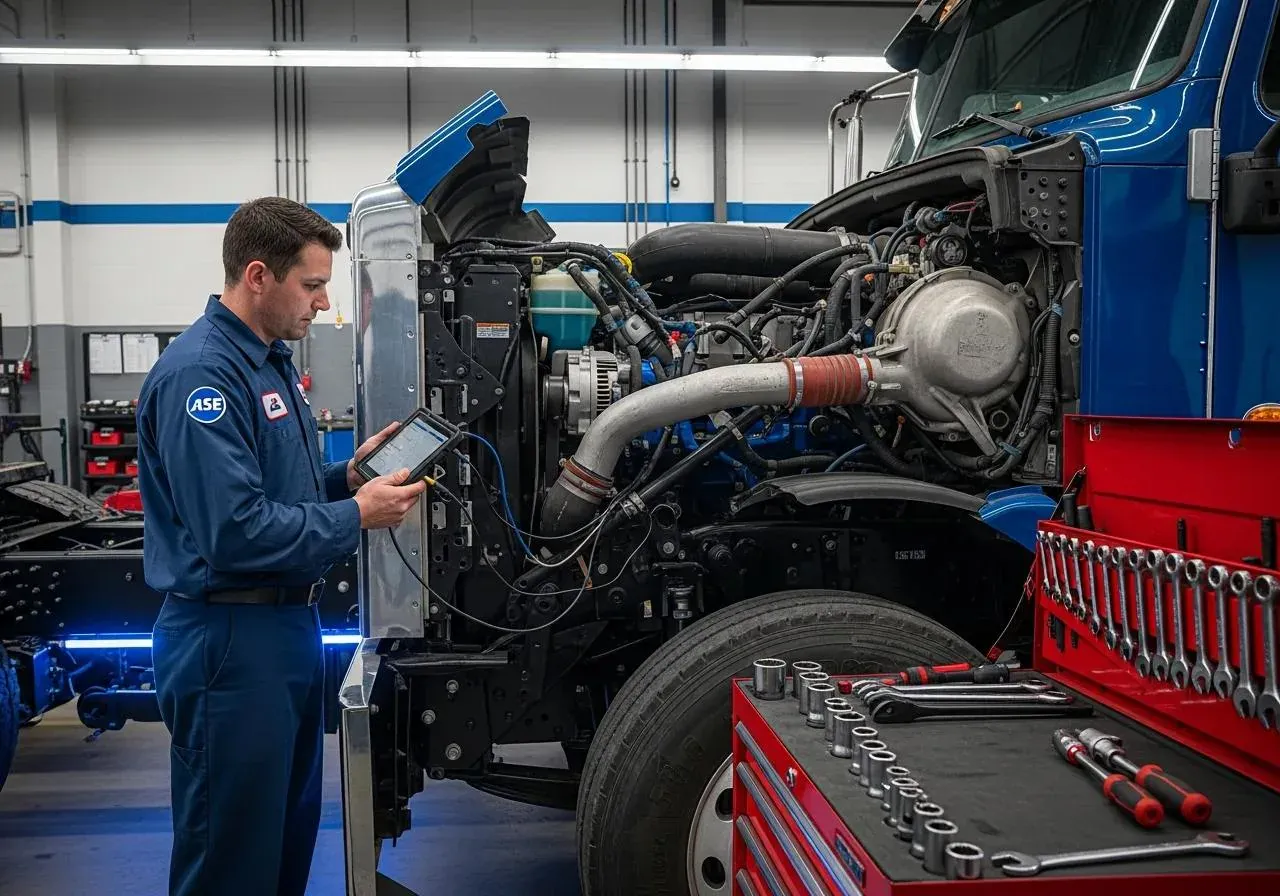
DPF regeneration is the process a diesel engine uses to raise exhaust temperature and oxidize soot trapped in the diesel particulate filter. When it works correctly, restriction drops and the filter can continue capturing particulate matter. When it does not, the truck may request a parked regen, limit power, or require diagnostic service. Regeneration is not a universal repair. A truck may need suitable driving conditions, an approved parked regeneration, a scan tool commanded service…
DPF Regeneration: Types, Process & Forced Regen Guide

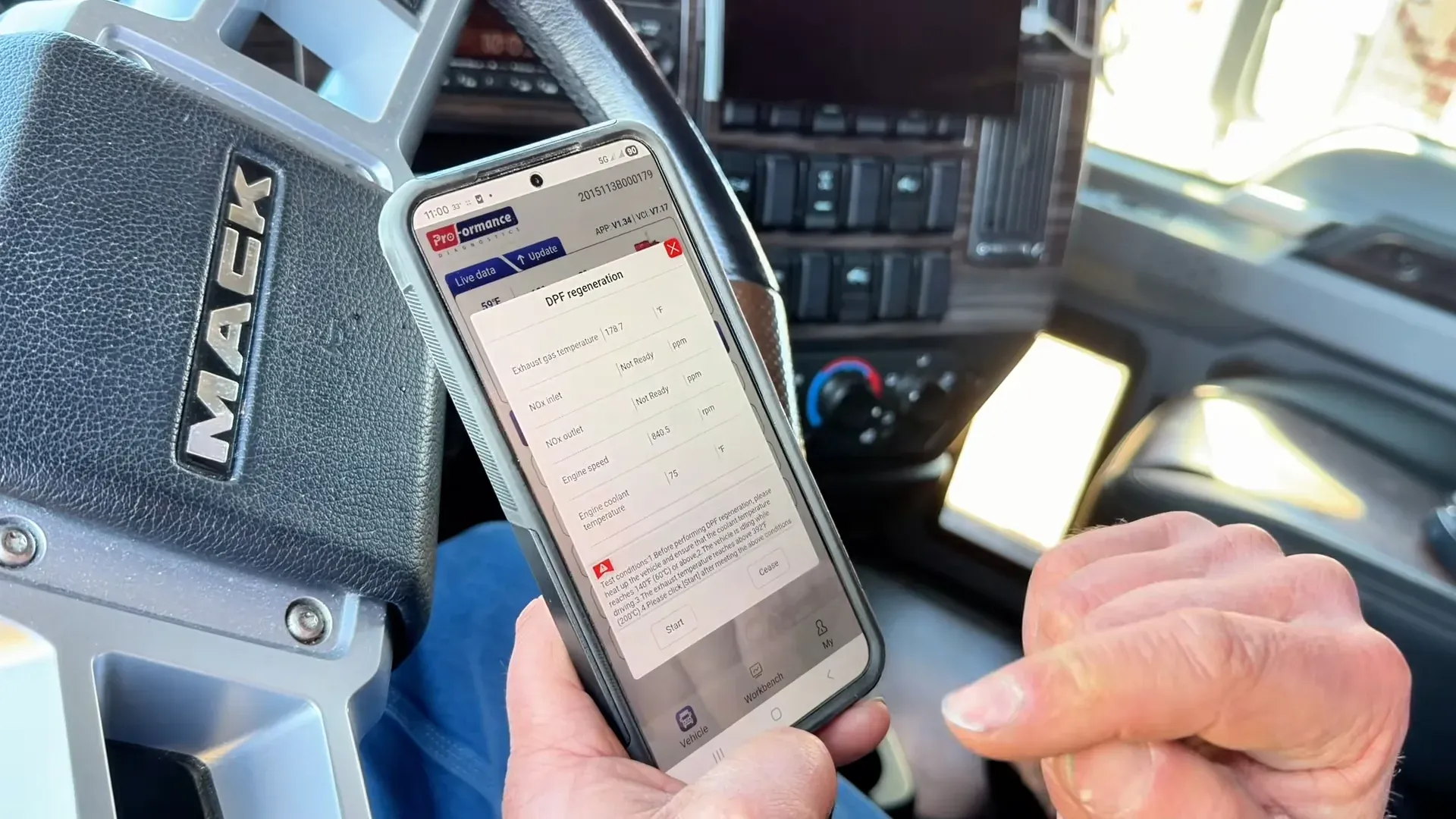
DPF regeneration is the process a diesel engine uses to raise exhaust temperature and oxidize soot trapped in the diesel particulate filter. When it works correctly, restriction drops and the filter can continue capturing particulate matter. When it does not, the truck may request a parked regen, limit power, or require diagnostic service.
Regeneration is not a universal repair. A truck may need suitable driving conditions, an approved parked regeneration, a scan-tool-commanded service regeneration, or no regeneration at all until an active fault is repaired. The correct choice depends on warning status, fault codes, soot and ash estimates, live data, and the exact engine manufacturer's instructions.
This guide covers the key steps involved in DPF regeneration, including safety checks, diagnostics, and regeneration procedures. Watch the video below for an additional practical reference.
Video source:Ryanfox. The workflow is useful, but the controls, enable conditions, temperature limits, and service steps for your truck must come from current OEM information.
What Is DPF Regeneration?
A diesel particulate filter captures soot before it exits the tailpipe. The engine control system estimates filter loading using information such as differential pressure, exhaust temperature, operating time, fuel use, and duty cycle. Regeneration raises aftertreatment temperature so trapped soot can oxidize into gases and a much smaller amount of residue.
Two filter loads matter:
- Soot is combustible particulate matter. Successful regeneration can oxidize it when the system reaches and controls the required conditions.
- Ash is noncombustible residue, including material associated with engine-oil additives. Regeneration does not remove it. An ash-loaded filter needs approved off-vehicle cleaning or replacement according to service limits.
This difference explains why repeatedly commanding a regen does not restore every restricted DPF. If the reported load stays high after completion, the cause may be ash, an inaccurate pressure signal, insufficient heat, contamination, or physical damage.
Passive, Active, Parked, and Forced DPF Regeneration
| Regen type | How it starts | Typical situation | Required action |
|---|---|---|---|
| Passive regeneration | Naturally, when exhaust temperature and load are sufficient | Sustained operation under suitable road and load conditions | No manual command; operate normally and monitor warnings |
| Active regeneration | Automatically commanded by the engine controls | Soot load has increased and normal exhaust heat is not enough | Keep operating only when OEM instructions permit it |
| Parked regeneration | Requested while the vehicle is stationary | The truck asks for a regen and all enable conditions are met | Park in an approved location and follow the operator's manual |
| Forced or service regeneration | Commanded with compatible diagnostic equipment | A qualified diagnostic procedure calls for a controlled regen | Check faults and live data first; follow current service information |
Passive and Active Regeneration
Passive regeneration occurs during normal driving when engine load produces suitable exhaust temperatures. A long-haul truck under sustained load is generally more likely to achieve these conditions than a truck that spends most of its time idling, making short trips, or operating at low speed.
During active regeneration, the engine control system changes operation to create additional heat. Depending on the system, this may involve fuel dosing and other strategies upstream of the filter. The event is automatic but can be interrupted when the truck is shut down or its duty cycle changes.
Parked and Forced Regeneration
A parked regen starts with the truck stationary after required conditions are satisfied. These can include parking-brake status, transmission position, engine temperature, fuel level, PTO state, pedal position, and the absence of faults that inhibit regeneration. There is no safe universal button sequence.
A forced regen is a diagnostic-service procedure commanded through a compatible scan tool. It is useful only when the vehicle supports the function and the technician has confirmed that regeneration is permitted and appropriate. It should not bypass an active sensor, dosing, electrical, or aftertreatment fault.
How to Tell Whether a Diesel Truck Needs a Regen
Start with warning indicators and current service information. A DPF or regeneration lamp may indicate that the system wants a driving or parked regeneration, while more severe warning combinations can require immediate service. Never assume every emissions warning means “force a regen.”
Useful evidence includes:
- The exact dash message and warning-lamp sequence
- Active and inactive diagnostic trouble codes
- Whether regeneration is requested, permitted, inhibited, active, or aborted
- Estimated DPF soot load and ash load, kept separate
- DPF differential pressure at key operating conditions
- Exhaust gas temperature sensor plausibility and progression
- Recent duty cycle, idle time, interrupted regens, and maintenance history
A regeneration may be reasonable when soot loading is within the OEM's serviceable range, data is plausible, no blocking fault remains, and enable conditions can be met. Repair or inspection comes first when there is a severe warning, suspected damage or contamination, unstable electrical supply, an implausible sensor, an exhaust leak, or a repeated abort.
Safety Checks Before DPF Regeneration
Regeneration can create extremely high exhaust temperatures. Use the operator's manual and service information for the exact truck, engine, calibration, and aftertreatment configuration.
- Move the truck to a well-ventilated, approved location away from people, dry vegetation, fuel, paper, wood, low structures, and other heat-sensitive material.
- Confirm that the exhaust outlet has adequate clearance and is not directed toward a wall, vehicle, or work area.
- Inspect for fuel, oil, coolant, or exhaust leaks and signs of aftertreatment damage.
- Secure the vehicle exactly as required, including parking brake, transmission, wheel chocks, PTO, and accessories where applicable.
- Do not proceed with a STOP ENGINE warning or when OEM instructions require shutdown and service.
- Keep people clear of the exhaust system and allow components to cool before inspection.
If any condition is uncertain, stop and obtain qualified service rather than testing the limit with another regen attempt.
Diagnostic Checks Before a Forced Regen
1. Record Fault Codes Before Clearing Them
Capture active and inactive codes, occurrence counts, freeze-frame information, and the driver's description. Codes involving exhaust temperature, DPF pressure, dosing, electrical supply, engine operation, or communication can block regeneration or make it unsafe. Clearing codes first removes evidence and does not repair the cause.
2. Confirm Enable Conditions in Live Data
Check that scan-tool values for parking brake, transmission, pedals, vehicle speed, regeneration inhibit, PTO, engine temperature, and other prerequisites match the truck's actual state. A switch can look correct physically while the control module sees the opposite state.
3. Check Temperature and Pressure Plausibility
On a cold engine, related temperature readings should be reasonably consistent with ambient conditions. A frozen, erratic, or biased exhaust gas temperature reading needs circuit diagnosis. Differential pressure should respond plausibly as exhaust flow changes; blocked, reversed, cracked, or melted pressure tubes can create a false soot-load picture.
4. Separate Soot Load From Ash Load
A soot estimate may be reduced by successful regeneration. An ash estimate represents noncombustible accumulation and follows a service interval or measured restriction procedure. Confusing the two leads to unnecessary heat cycles and delayed filter maintenance.
How the DPF Regeneration Process Works
- The control system accepts the request. It verifies conditions and checks for faults or inhibit states.
- Engine operation changes. Idle speed and other parameters may change to stabilize exhaust flow.
- The aftertreatment system builds heat. The strategy depends on the engine. The module monitors exhaust temperatures and may command dosing.
- Trapped soot oxidizes. When required conditions are maintained, soot converts into gases and a small amount of residue.
- The system verifies progress. Temperature behavior, time, estimated soot load, differential pressure, and other data determine whether the event completed or aborted.
- The engine returns to normal operation. Verify completion in status and data rather than assuming success because engine speed dropped.
Do not walk away from a service regeneration. Watch for abnormal heat, smoke, smell, leaks, warning changes, or an abort reason, and be prepared to stop according to the approved procedure.
Why a DPF Regeneration May Not Start or Finish
Common causes include an active blocking fault, regeneration inhibit, an unmet vehicle condition, low voltage, implausible exhaust-temperature data, differential-pressure sensor or tube problems, a dosing fault, an exhaust leak, weak DOC heat generation, a low-load duty cycle, or a DPF that is ash-loaded, contaminated, cracked, or melted.
If your truck refuses a parked regen, starts and stops, or completes without reducing the reported load, follow Truck Won't Regen? 12 Reasons Your DPF Regeneration Fails. Repeating the command is not a substitute for finding the abort reason.
DPF Regeneration vs. DPF Cleaning
- Regeneration is an on-vehicle process intended to oxidize soot in a serviceable filter.
- DPF cleaning generally means removing the filter for an approved process that removes accumulated ash and confirmed restriction.
- DPF replacement is necessary when inspection identifies damage, melting, cracking, unrecoverable contamination, or another nonserviceable condition.
A scan tool cannot burn ash out of a filter or repair a damaged substrate. It can help determine whether regeneration is permitted, command supported functions, and monitor the data needed to decide what comes next.
Can a Heavy-Duty Scan Tool Force a DPF Regen?
Some heavy-duty diagnostic tools can command a forced or service regeneration on supported vehicles. Coverage varies by truck make, engine, control module, model year, software level, and connection method. A tool should also provide enough fault and live-data context to decide whether the command is appropriate.
Proformance Link supports diagnostic and service functions, including DPF regeneration on compatible applications. Confirm coverage for the exact vehicle before purchase or use. Compare heavy-duty truck diagnostic tools, then match the tool to the trucks and functions your operation needs.
For the wider system around the filter, read the diesel aftertreatment system guide.
Frequently Asked Questions
What is DPF regeneration?
DPF regeneration raises exhaust-system temperature so combustible soot trapped in the filter can oxidize. It does not remove noncombustible ash or repair a damaged filter.
How long does DPF regeneration take?
Time varies by engine, regeneration type, soot load, operating conditions, and manufacturer strategy. Use current operator or service information instead of a universal estimate.
Can I drive during DPF regeneration?
Passive and automatic active regeneration can occur during normal driving when the manufacturer permits continued operation. A parked or service regeneration requires the vehicle to remain secured in an approved location.
Can a diagnostic scan tool force DPF regeneration?
Yes, a compatible heavy-duty scan tool can command forced regeneration on supported engines and modules. First confirm fault status, enable conditions, sensor plausibility, filter condition, and exact coverage.
Is DPF regeneration the same as DPF cleaning?
No. Regeneration oxidizes soot while the filter remains installed. Professional cleaning removes accumulated ash and confirmed restriction after removal. A damaged filter may require replacement.
Technical References
- Delphi: How to Perform a DPF Regeneration
- MSHA: Diesel Particulate Filter Explanations
- Cummins Tier 4 Engine Operating Tips, Bulletin 4087187
- Mack Exhaust Aftertreatment System Fault Tracing, hosted by NHTSA
These sources support the general explanation and diagnostic sequence. They do not replace current manufacturer information for the exact vehicle, engine, calibration, and aftertreatment system being serviced.