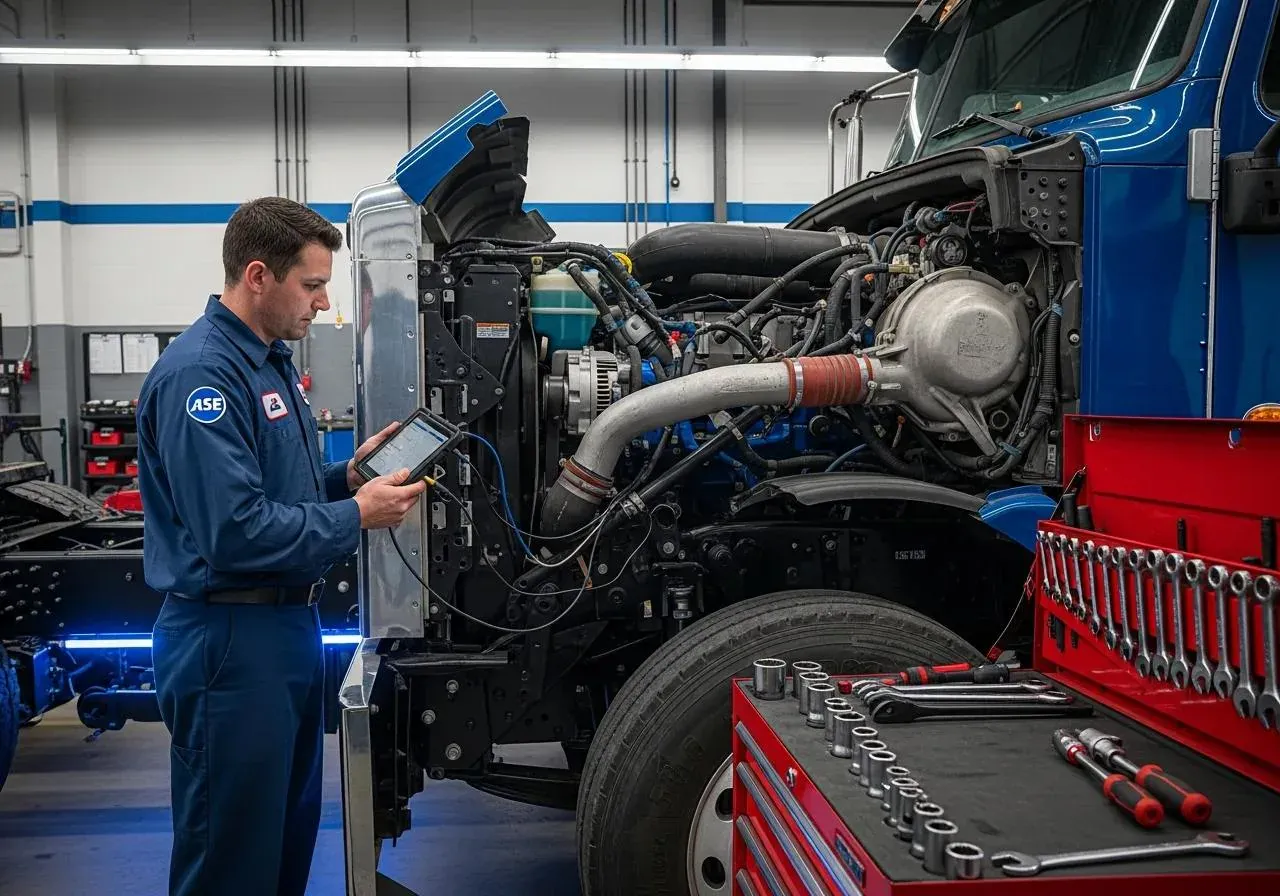
Most SCR faults blamed on sensors start with the fluid in the tank. Diesel Exhaust Fluid is the one consumable on a modern truck that the driver refills, and it is the one consumable that arrives with a strict chemical specification attached. Get the fluid right and the SCR system works quietly for hundreds of thousands of miles. Get it wrong — diluted, contaminated, aged, or simply the wrong liquid — and the truck responds with efficiency codes, derates, and a regeneration strategy that will…
DEF Quality Problems: Contamination, Crystallization, and SCR Faults

Most SCR faults blamed on sensors start with the fluid in the tank.
Diesel Exhaust Fluid is the one consumable on a modern truck that the driver refills, and it is the one consumable that arrives with a strict chemical specification attached. Get the fluid right and the SCR system works quietly for hundreds of thousands of miles. Get it wrong — diluted, contaminated, aged, or simply the wrong liquid — and the truck responds with efficiency codes, derates, and a regeneration strategy that will not complete.
This guide covers the four ways DEF quality actually fails, what those failures look like on a scan tool, and how to prove the problem is the fluid before you spend money on a NOx sensor. It pairs with The Complete Guide to Diesel Aftertreatment Systems, which covers how DEF dosing fits into the wider exhaust path.
What DEF Actually Is
DEF is a solution of urea in deionized water at 32.5% urea by weight. That number is not arbitrary. It is the concentration at which the solution has the lowest freezing point and the most predictable decomposition behavior in the SCR catalyst.
When DEF is injected into the exhaust stream, heat converts the urea into ammonia. That ammonia is what actually reacts with NOx across the SCR catalyst. Everything upstream of that reaction is chemistry, and chemistry is unforgiving about concentration.
Two properties drive most DEF quality failures:
- Urea concentration. Below specification, there is not enough ammonia to reduce NOx. Above specification, urea does not fully decompose and leaves deposits behind.
- Purity. Fuel, oil, coolant, salt, and metal ions poison the catalyst or clog the dosing injector.
Why Purity Is the Whole Point
The SCR catalyst is a consumable with a long but finite life, and contamination shortens it permanently. A catalyst poisoned by the wrong fluid does not recover when you refill with good DEF — the damage is already done.
The dosing injector is even less tolerant. Its orifice is small enough that crystallized urea or a film of oil will change the spray pattern, and a bad spray pattern means incomplete decomposition, which means deposits on the catalyst face and a mixing chamber that progressively plugs.
This is why DEF problems escalate. One contaminated fill does not just set a code. It starts a chain: poor spray, incomplete decomposition, deposit buildup, reduced catalyst efficiency, more frequent derates, and eventually a catalyst replacement that costs far more than the fluid ever did.
The Four Ways DEF Quality Goes Wrong
Dilution with water
Water is the most common contaminant because it looks harmless. A driver low on DEF, with no jug on hand, tops up from a water can. Urea concentration drops, the quality sensor reads out of range, and the truck derates.
Water also brings its own problems. Tap water carries minerals that leave scale in the dosing system, and in freezing weather a diluted solution behaves differently than the system expects.
The wrong fluid entirely
Diesel in the DEF tank happens more often than most fleets admit, usually because a bulk hose or a jug was mislabeled. The result is immediate: fuel attacks the seals in the dosing module, contaminates the entire tank, and can destroy the pump.
Other fluids make the same trip — coolant, windshield washer fluid, and once in a while brake fluid. Brake fluid is the worst of these because it is aggressive toward seals and does not flush out easily.
Age and heat
DEF degrades over time, and heat accelerates it. Stored in direct sun or in a tank that sits at high ambient temperature, urea hydrolyzes and the concentration drifts out of specification. A drum that sat in a hot yard through the summer is not equivalent to a fresh one.
As a rule of thumb, treat DEF as perishable. Bulk storage should be shaded, sealed, and used in rotation, and a tank that has been sitting for many months is worth testing rather than assuming.
Concentration drift from the drum
Bulk DEF handling introduces its own risks. A transfer pump used for both DEF and other fluids, an unsealed drum, or a contaminated nozzle all put the fluid out of specification without anything visibly wrong.
Measure bulk deliveries rather than trusting the supplier's certificate alone, particularly if the tank is outside and unshaded.
Symptoms That Point at DEF Quality
DEF quality faults imitate sensor faults closely, which is exactly why they get misdiagnosed. The patterns that point toward the fluid:
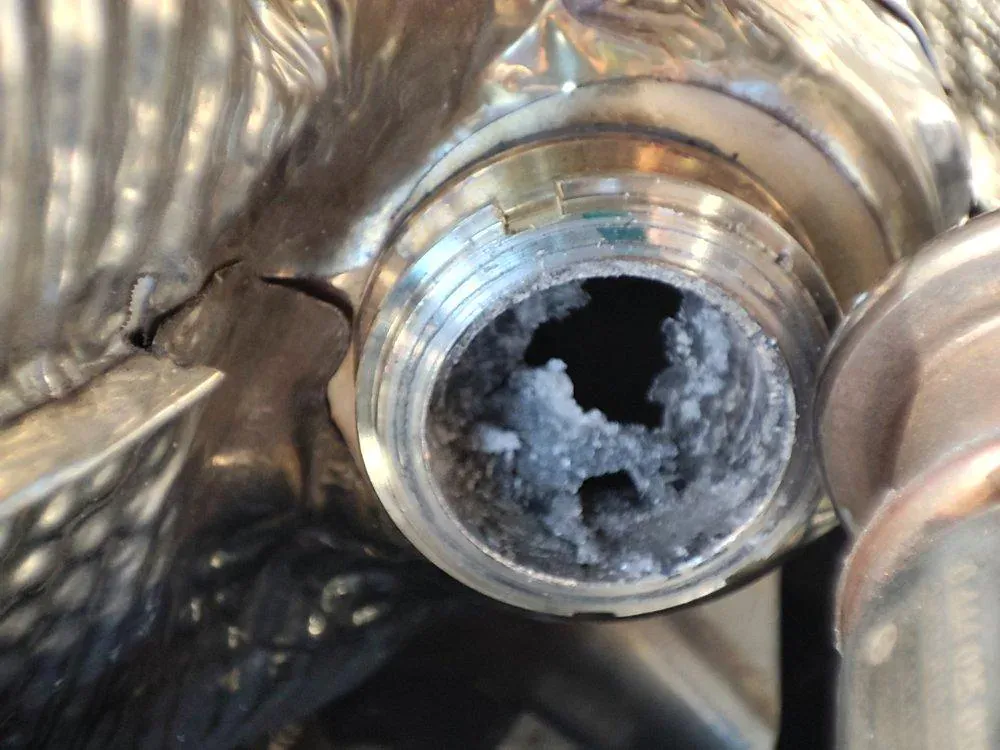
- White or gray crystalline deposits around the dosing injector, on the injector tip, or in the mixing chamber
- SCR efficiency codes (P20EE and equivalents) that return shortly after being cleared
- Reductant quality codes (P207F, or SPN 3364) that persist after a refill
- A urea smell in the cab or around the tank, or visible crystals around the filler neck
- Derate events that begin shortly after a refill rather than gradually
- Dosing injector clogging that recurs within a short interval
The refill connection is the single most useful clue. A fault that appears within a few hundred miles of adding fluid is a fluid story until you prove otherwise.
What the DEF Quality Sensor Actually Reads
Most heavy-duty DEF quality sensors infer urea concentration indirectly — typically from how fast sound travels through the fluid, with some designs using conductivity instead. Neither method measures purity directly.
That matters for diagnosis in two ways.
First, the sensor can only report on what it can infer. It will catch dilution and many contamination events as an out-of-range concentration, but it will not detect every contaminant. Clean-looking, correctly-concentrated fluid can still be chemically wrong.
Second, when the sensor itself fails, the reading goes out of range for a reason that has nothing to do with the fluid. This is where most misdiagnosis happens: the sensor gets replaced, the new sensor reads the same contaminated fluid, and the code returns.
Testing DEF Without Guessing
You do not need a laboratory to catch most DEF quality problems. Three checks cover the majority of cases.
Refractometer. A DEF refractometer reads urea concentration directly from a sample and takes under a minute. Compare against the ISO 22241 specification — 32.5% by weight — and against the value the quality sensor is reporting. If the two disagree, you have learned something useful either way.
Visual and olfactory inspection. Cloudy fluid, visible particles, an oily sheen, or a fuel smell are all disqualifying. Good DEF is clear and nearly odorless.
Test strips and lab analysis. When the refractometer reads correctly but the system still complains, strips and a proper ISO 22241 lab panel will catch what the field tools cannot.
Record the concentration and the sensor's reported value together. The comparison is what separates a fluid problem from a sensor problem.
Storage and Handling Rules That Prevent Most Failures
Most contaminated-tank incidents trace back to handling, not to the supplier.
- Store DEF in sealed, dedicated containers — never in a jug that has held anything else
- Keep bulk storage shaded and away from direct sun; heat ages the fluid
- Use a dedicated transfer pump and nozzle, and label them
- Rotate stock so older DEF is used first
- Never top up with water, and never "stretch" a partial jug with anything
- Keep the tank filler area clean; dirt around the neck ends up in the tank
- Check bulk deliveries rather than assuming the certificate matches the tank
If Contaminated DEF Has Already Been Added
The right response depends on what went in and how much.
Water dilution in a small amount may be correctable by topping up with fresh DEF — but only if the resulting concentration is verified with a refractometer afterward, not assumed.
Fuel, oil, coolant, or solvent contamination is a drain-and-flush job. The tank must be emptied, the system flushed per the OEM procedure, and in fuel-contamination cases the dosing module and its seals inspected before returning the truck to service. Do not simply fill over the top of contaminated fluid; you will spread the contamination through the entire system and pay for it twice.
Why DEF Faults Look Like Sensor Faults
The SCR system reports on itself through the NOx sensors downstream of the catalyst, so a fluid problem surfaces as a sensor complaint.
When DEF quality is out of specification, ammonia dosing is wrong, NOx conversion falls, and the downstream NOx sensor reports higher-than-expected NOx. The ECM interprets that as a catalyst efficiency failure and sets P20EE. Nothing is wrong with the NOx sensor — it is correctly reporting the consequence of bad fluid.
This is the trap. Replacing the NOx sensor addresses the messenger. For the sensor side of the diagnosis, see NOx Sensors: The Tiny Device That Keeps Your Diesel Engine Clean and the structural breakdown in our NOx sensor analysis.
The same logic explains why DEF problems and regeneration problems travel together. A system that cannot dose correctly cannot complete a regeneration cycle, which is the failure mode covered in Why Your Truck Won't Regenerate.
A Repeatable DEF Quality Workflow
- Read the reported value. Note what the DEF quality sensor is reporting before you touch anything.
- Pull a sample from the tank — not from the filler neck, and not from a fresh jug.
- Read concentration with a refractometer and compare against the sensor value.
- Inspect the sample for color, cloudiness, particles, and odor.
- Inspect the dosing injector and mixing chamber for crystals and deposits.
- Ask the refill question. What went in, when, and from where? Recent refills are the strongest clue.
- Confirm the fluid before replacing any component. A sensor replaced over bad fluid will fail again.
- Drain and flush if contamination is confirmed, then recheck the sensor against a fresh sample.
- Recheck live data after the repair under the same conditions you recorded before.
Recording the concentration reading before and after is what separates a repair you can trust from a parts swap that happened to work.
Frequently Asked Questions
What happens if DEF gets diluted with water?
Urea concentration drops below the ISO 22241 specification, so there is not enough ammonia to reduce NOx. The quality sensor reads out of range, the truck derates, and SCR efficiency codes appear. Tap water also carries minerals that leave scale in the dosing system. A small dilution may be correctable by topping up with fresh DEF, but verify the resulting concentration with a refractometer rather than assuming.
Can I mix DEF brands or top up with a different supplier's fluid?
Yes. Any DEF that meets ISO 22241 is chemically interchangeable, so brands and suppliers can be mixed freely in the same tank. What you cannot mix is anything that is not DEF. The risk is not the brand on the jug, it is a mislabeled container, a shared transfer pump, or a filler hose that has carried something else.
Does cold weather ruin DEF?
No. DEF freezes at roughly -11C (12F), and freezing does not degrade it — the fluid returns to specification once it thaws. What does degrade DEF is heat. Sustained high storage temperatures cause urea to hydrolyze and the concentration to drift, which is why bulk storage should be shaded and stock rotated.
How long does DEF last in storage?
Treat DEF as perishable. Sealed and stored below about 30C, most product carries a shelf life on the order of a year, and it shortens as storage temperature rises. DEF that has sat through a hot summer in an unshaded drum or tank is worth testing with a refractometer before you trust it, rather than assuming it is still good.
Will a DEF quality sensor detect every contamination problem?
No. Most quality sensors infer urea concentration indirectly — typically from the speed of sound through the fluid — and cannot measure purity directly. They will catch dilution and many contamination events as an out-of-range reading, but clean-looking fluid at the correct concentration can still be chemically wrong. That is why a sample, a refractometer, and when needed a lab panel remain part of the diagnosis.
Why does the SCR efficiency code come back after replacing the NOx sensor?
Because the NOx sensor was reporting a consequence, not a cause. When DEF quality is out of specification, dosing is wrong, NOx conversion falls, and the downstream sensor correctly reports elevated NOx. Fitting a new sensor over the same contaminated fluid reproduces the same reading. Test the fluid before replacing any component in the circuit.
What to Do Next
DEF quality rewards a sample and a minute with a refractometer far more than it rewards parts. Read the reported value, pull a sample, compare the two, and check the refill history before you touch a sensor.
- Read DEF quality, tank level, and NOx values together with a tool that records them: Proformance Link
- Look up P20EE, P207F, or any aftertreatment code before ordering parts in our fault code reference
- Keep the wider picture in view with Understanding Critical Data Points in Heavy-Duty Truck Diagnostics
Keep the fluid in specification and the aftertreatment system stays out of your bay.